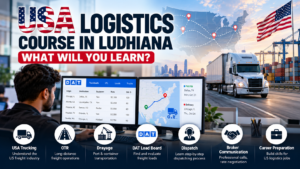
The logistics industry has become one of the most important parts of modern business. From transporting raw materials to delivering finished products, logistics connects manufacturers, suppliers, warehouses, transporters and customers across cities and countries.
For students, graduates and professionals looking to build a career in this growing sector, choosing the right logistics course in Ludhiana can be an important first step.
Ludhiana is one of Punjab’s major industrial and commercial centres, with strong activity in manufacturing, transportation, trading and distribution. This makes logistics and supply chain management particularly relevant for people looking to develop practical industry skills.
ATOZ POWER LOGISTICS provides logistics-focused training designed to help learners understand how the logistics industry operates and develop practical knowledge relevant to modern transportation and supply-chain operations.
Why Choose a Logistics Course in Ludhiana?
Ludhiana has a strong industrial ecosystem and is well connected to major markets across India. Businesses involved in manufacturing, exports, transportation, warehousing and distribution depend heavily on efficient logistics operations.
A logistics course can help learners understand how products, information and transportation services move through the supply chain.
Instead of learning only theoretical concepts, students can focus on practical areas such as:
- Transportation management
- Freight and shipment processes
- Logistics operations
- Supply chain fundamentals
- Truck dispatch operations
- Freight documentation
- Load management
- Carrier and broker coordination
- Shipment tracking
- Customer communication
- International logistics concepts
For anyone searching for logistics training in Ludhiana, practical exposure to these areas can provide a stronger understanding of how the industry works.
What Is Logistics Management?
Logistics management involves planning, implementing and controlling the movement and storage of goods, services and related information.
A typical logistics process can involve several stages:
Supplier → Transportation → Warehouse → Distribution → Customer
Every stage requires proper planning and coordination.
For example, a transportation company may need to find an appropriate carrier, negotiate transportation requirements, prepare documentation, track the shipment and communicate updates to the relevant parties.
This is why trained logistics professionals are important for businesses.
What Can You Learn in a Logistics Course?
A good logistics management course should focus on the practical processes used in the industry.
At ATOZ POWER LOGISTICS, learners can develop an understanding of important logistics concepts and operational processes.
1. Transportation Management
Transportation is one of the core components of logistics.
Students can learn how transportation operations work, including shipment planning, carrier coordination, delivery processes and transportation documentation.
Understanding transportation operations is particularly useful for people interested in trucking, freight and dispatch-related careers.
2. Truck Dispatch Operations
Truck dispatching has become an attractive career area for people interested in international logistics operations.
A truck dispatcher may coordinate with drivers, carriers, brokers and other parties to help manage loads and transportation schedules.
A practical logistics training program can introduce students to concepts such as:
- Load searching
- Carrier coordination
- Broker communication
- Rate confirmation
- Pickup and delivery information
- Load tracking
- Documentation
- Driver communication
These skills can help learners understand the operational side of trucking and freight transportation.
3. Freight and Load Management
Freight management involves coordinating the movement of goods from one location to another.
Students can learn how different parties participate in a shipment and how information flows between shippers, brokers, carriers, drivers and customers.
Understanding these relationships is essential for efficient logistics operations.
4. Logistics Documentation
Documentation is a critical part of logistics.
Depending on the shipment and transportation process, logistics professionals may work with documents such as:
- Bills of Lading
- Rate Confirmations
- Proof of Delivery
- Invoices
- Shipment details
- Delivery records
- Carrier documents
Learning how logistics documentation works can help reduce operational errors and improve communication.
5. Supply Chain Fundamentals
Logistics is one component of the broader supply chain.
A supply chain may include:
Procurement → Manufacturing → Warehousing → Transportation → Distribution → Customer
A logistics course can help students understand how these activities are connected.
This knowledge can be useful for learners interested in logistics management, supply chain operations, warehousing, procurement and transportation.
Who Should Join a Logistics Course in Ludhiana?
A logistics course can be suitable for a wide range of learners.
Students and Freshers
Students who want to enter the logistics industry can use professional training to understand the sector before applying for jobs or internships.
Graduates
Graduates from different academic backgrounds can explore logistics as a career option and develop industry-specific knowledge.
Working Professionals
Professionals already working in transportation, administration, customer service or operations can use logistics training to strengthen their understanding of supply-chain processes.
Entrepreneurs
People planning to start a logistics, transportation or freight-related business can also benefit from understanding how logistics operations function.
Career Opportunities After Logistics Training
The logistics industry includes a wide range of operational and management roles.
Depending on qualifications, experience and specialization, learners may explore roles such as:
- Logistics Coordinator
- Logistics Executive
- Transportation Coordinator
- Truck Dispatcher
- Freight Coordinator
- Operations Executive
- Supply Chain Executive
- Warehouse Coordinator
- Dispatch Executive
- Freight Operations Executive
- Customer Support Executive
- Logistics Sales Executive
Career progression depends on individual skills, experience, employer requirements and specialization.
For students searching for logistics jobs in Ludhiana, developing practical knowledge before entering the industry can be a useful advantage.
Why Practical Logistics Training Matters
One of the biggest differences between simply reading about logistics and receiving practical training is the ability to understand how concepts are applied in real operational situations.
For example, knowing the definition of freight transportation is different from understanding how a shipment is actually coordinated.
Practical training can help learners understand:
- How logistics teams communicate
- How transportation operations are coordinated
- How shipment information is managed
- How documentation is handled
- How dispatch processes work
- How brokers, carriers and drivers interact
- How problems are identified and communicated
This practical understanding can make the transition from learning to working more structured.
Why Choose ATOZ POWER LOGISTICS?
ATOZ POWER LOGISTICS focuses on developing practical logistics knowledge for learners who want to understand the transportation and logistics industry.
The training is designed around industry-relevant concepts rather than focusing exclusively on textbook theory.
Learners can gain exposure to important areas of logistics operations, transportation and dispatch while developing professional communication and operational skills.
Whether you are a fresher exploring your career options or someone looking to develop logistics-specific skills, structured training can help you understand the industry more effectively.
Is Logistics a Good Career Option?
Logistics can be an attractive career field because almost every industry depends on the movement of goods.
Manufacturing companies require raw materials. Retail businesses require inventory. E-commerce companies require delivery networks. Exporters require transportation and freight services.
This creates demand for people who understand logistics operations, transportation coordination, warehousing and supply-chain processes.
The growth of international trade and digital commerce has also made logistics increasingly technology-driven.
Modern logistics professionals may work with:
- Transportation Management Systems
- Shipment tracking platforms
- Digital documentation
- Load boards
- Communication platforms
- Warehouse management systems
- Data and reporting tools
Therefore, learning both logistics fundamentals and relevant digital tools can help learners prepare for modern logistics operations.
Logistics Course in Ludhiana for International Opportunities
Logistics is not limited to domestic transportation.
International freight movement involves multiple stakeholders and processes, including transportation providers, freight forwarders, customs-related processes, documentation and international supply-chain coordination.
For learners interested in global logistics, international freight forwarding and transportation operations can provide additional career directions.
Ludhiana’s industrial and export-oriented business environment also makes knowledge of logistics and international trade particularly relevant.
How to Choose the Right Logistics Training Institute in Ludhiana?
Before enrolling in a logistics course, students should consider several factors.
Check the Course Curriculum
Look for a course that covers practical logistics operations instead of only theoretical definitions.
Focus on Practical Learning
Training should help you understand how logistics processes work in real-world situations.
Check Industry Relevance
The logistics industry changes with technology, international trade and transportation practices. Choose training that reflects current operational requirements.
Understand the Career Path
Before joining, identify which area interests you most:
- Truck dispatch
- Freight operations
- Transportation
- Warehousing
- Supply chain
- International logistics
- Logistics management
This can help you choose the right specialization.
Start Your Logistics Career with ATOZ POWER LOGISTICS
If you are searching for a logistics course in Ludhiana, ATOZ POWER LOGISTICS can help you build a foundation in logistics and transportation operations.
The objective of professional logistics training is not simply to provide a certificate. It is to develop practical knowledge, operational understanding and the confidence to work with real logistics processes.
Whether you are a student, graduate, working professional or aspiring entrepreneur, learning logistics can open the door to multiple career and business opportunities.
Ready to Learn Logistics?
Take the first step toward developing your logistics skills with ATOZ POWER LOGISTICS.
📞 Call: +91 74070 44444
📧 Email: atozpowerlogistics@gmail.com
Enroll in a logistics course in Ludhiana and start building practical skills for the modern logistics industry.
Frequently Asked Questions About Logistics Courses in Ludhiana
1. Which is the best logistics course in Ludhiana?
The right logistics course depends on your career objective. Students should compare curriculum, practical training, industry relevance, specialization and training methodology before choosing a course.
2. Is logistics a good career option after graduation?
Yes. Graduates can explore several areas including transportation, freight operations, supply chain, warehousing, dispatch and logistics management.
3. Can freshers join a logistics course?
Yes. Logistics training can be useful for freshers who want to understand the industry and develop relevant operational skills before starting their careers.
4. What is taught in a logistics course?
Depending on the program, logistics courses can cover transportation management, freight operations, supply chain fundamentals, documentation, warehousing, dispatch operations and logistics technology.
5. Can I learn truck dispatch through logistics training?
Truck dispatch can be included as a specialization within logistics training. Students interested in this field should choose a course that specifically provides practical exposure to dispatch operations.
6. Why study logistics in Ludhiana?
Ludhiana has a strong industrial and transportation ecosystem, making logistics a relevant career field for students and professionals in the region.
7. Is logistics useful for international careers?
Yes. Logistics is a global industry. Knowledge of freight forwarding, transportation, supply chains and international logistics can be relevant for companies operating across international markets.
Final Thoughts
The logistics industry offers multiple career paths across transportation, freight, supply chain, warehousing and dispatch operations.
For students and professionals in Ludhiana, investing in practical logistics training can be a valuable step toward understanding this industry and developing job-relevant skills.
With structured learning and continuous skill development, you can build a stronger foundation for a career in logistics and explore opportunities in both domestic and international operations.
Start your logistics journey with ATOZ POWER LOGISTICS today.