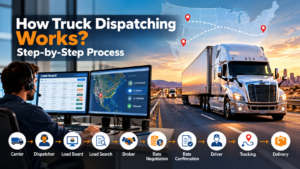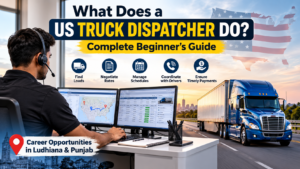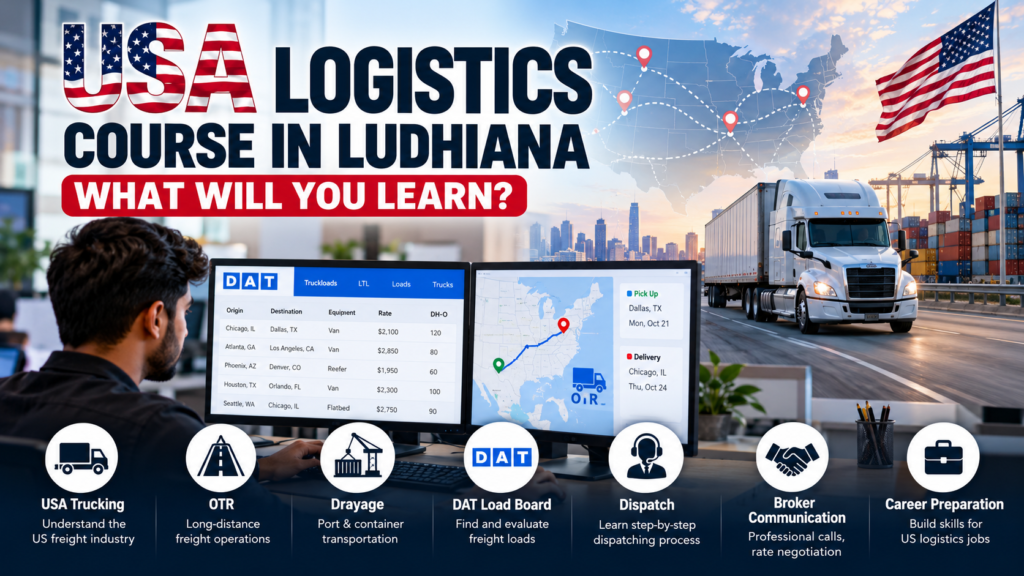
The USA trucking and logistics industry offers career opportunities for people who understand truck dispatching, load booking, broker communication, and freight operations. However, entering this field requires more than theoretical knowledge. You need practical training in how freight moves across the United States, how dispatchers find loads, and how they coordinate with drivers and brokers.
If you are searching for a USA Logistics Course in Ludhiana, it is important to understand what the course actually teaches and which skills you need to work in US logistics operations.
At ATOZ Power Logistics, the learning focus is on understanding USA trucking operations, including Over-the-Road (OTR) transportation, drayage, DAT load boards, dispatching, broker communication, and career preparation.
This guide explains the key topics you should learn during USA logistics training and how these skills can help you prepare for opportunities in the trucking and freight industry.
What Is a USA Logistics Course?
A USA logistics course is a career-oriented training program designed to help students understand freight transportation and trucking operations in the United States.
Unlike a general logistics course that may cover warehousing, inventory management, and supply chain concepts, a specialized US logistics program focuses on the day-to-day activities involved in moving freight across American transportation networks.
Depending on the curriculum, students may learn how to:
- Understand the US trucking industry and its major stakeholders.
- Find available freight loads using load boards.
- Coordinate shipments between truck drivers, brokers, and shippers.
- Understand OTR trucking and drayage operations.
- Communicate professionally with US freight brokers.
- Track shipments and manage dispatch updates.
- Prepare for entry-level roles in US trucking and logistics operations.
The objective of USA logistics training is to build practical knowledge of freight operations so that students can understand how dispatching works in a real business environment.
1. Understanding the USA Trucking Industry
The first step in a US logistics course is understanding how the American trucking industry operates.
Trucking plays a major role in transporting goods across the United States. Businesses depend on trucking companies to move products between manufacturers, distribution centers, warehouses, ports, and retail locations.
Students need to understand the responsibilities of the main participants in a freight transaction.
Key industry participants
Shippers: Businesses that need goods transported from one location to another.
Freight brokers: Intermediaries who connect shippers with suitable carriers and coordinate freight movements.
Carriers: Companies that provide transportation services using trucks and drivers.
Dispatchers: Professionals who coordinate loads, communicate with drivers, monitor shipments, and help manage daily trucking operations.
Drivers: The people responsible for physically transporting freight to its destination.
A dispatcher must understand how these participants work together. This knowledge helps students understand the complete process, from finding a load to confirming its delivery.
2. Learning OTR (Over-the-Road) Trucking
OTR stands for Over-the-Road trucking. It generally involves transporting freight over long distances, often between different states in the United States.
OTR trucking is an important part of US freight transportation, and understanding it is a key component of practical trucking and dispatch training.
What will you learn about OTR?
During OTR-focused training, students should learn about:
- Long-distance freight transportation.
- Understanding pickup and delivery locations.
- Route planning and estimated transit times.
- Load scheduling and driver coordination.
- Shipment tracking and delivery updates.
- Communication when delays or operational issues occur.
- Understanding the importance of driver hours-of-service requirements.
For example, a carrier may need to transport a shipment from Texas to Pennsylvania. The dispatcher must understand the pickup appointment, delivery deadline, estimated transit time, driver availability, and any relevant route constraints.
These details help dispatchers coordinate shipments more effectively.
OTR knowledge is useful for students interested in truck dispatching, carrier operations, and freight coordination roles.
3. Understanding Drayage Operations
Drayage is the short-distance transportation of freight, commonly involving the movement of shipping containers between ports, rail terminals, container yards, warehouses, and distribution facilities.
It is especially relevant to freight movements involving ocean shipping and intermodal transportation.
A USA logistics course that includes drayage should help students understand the operational requirements of container transportation.
Important drayage concepts
Students should become familiar with:
- Port-to-warehouse and terminal-to-warehouse movements.
- Container pickup and delivery coordination.
- Understanding container availability and appointment schedules.
- Terminal and port procedures.
- Chassis availability and coordination.
- Container return requirements.
- Demurrage, detention, and other potential accessorial charges.
For example, when a container arrives at a port, the transportation team may need to coordinate its pickup, arrange the truck and chassis, meet the delivery appointment, and ensure the container is returned within the applicable time requirements.
Delays can lead to additional costs. Therefore, communication, scheduling, and accurate documentation are important in drayage operations.
Learning drayage basics gives students a broader understanding of the US freight industry beyond traditional long-distance trucking.
4. Learning How to Use the DAT Load Board
A major practical topic in a US logistics course is learning how freight load boards work.
DAT is a well-known freight marketplace used by transportation professionals to search for available loads and trucks. Access to particular listings and features depends on the applicable subscription and account permissions.
For dispatchers, understanding how to search for suitable freight is an important operational skill.
What is DAT?
DAT provides tools for freight professionals to find loads, identify truck capacity, review available shipment information, and evaluate potential freight opportunities.
Students learning about DAT should understand how to navigate the platform and assess load information before making booking decisions.
What should DAT training cover?
A practical curriculum may include:
- Understanding the load board interface.
- Searching for available loads by origin and destination.
- Filtering loads by equipment type.
- Reviewing pickup and delivery dates.
- Understanding listed rates and rate-per-mile calculations.
- Evaluating mileage, deadhead, and route suitability.
- Identifying relevant shipment requirements.
- Comparing available loads before contacting brokers.
Example: Evaluating a freight load
Suppose a dispatcher finds a load from Atlanta, Georgia, to Dallas, Texas.
Before considering the load, the dispatcher should review the offered rate, mileage, pickup and delivery appointments, equipment requirements, commodity details, and the truck’s location.
The dispatcher should also consider deadhead miles, expected operating costs, and whether the load fits the carrier’s schedule.
The highest advertised rate is not automatically the best option. A suitable load must make operational and financial sense for the carrier.
Important: DAT is a tool, not a substitute for decision-making. Effective dispatching requires understanding the information displayed on the platform and verifying the relevant details before booking.
5. Learning Truck Dispatching Step by Step
Truck dispatching is one of the central skills students should develop during USA logistics training.
A truck dispatcher helps coordinate freight movements, works with drivers and brokers, monitors shipment progress, and communicates updates throughout the transportation process.
The role requires organization, problem-solving, communication, and attention to detail.
The truck dispatching process
A structured dispatch workflow generally includes the following steps:
Step 1: Understand truck availability
Check the truck’s current location, equipment type, availability, and expected readiness for the next load.
Step 2: Search for suitable loads
Use appropriate load boards and other authorized sources to identify freight that matches the truck’s location, equipment, schedule, and operational requirements.
Step 3: Evaluate the load
Review the offered rate, mileage, pickup and delivery appointments, commodity, special requirements, and potential operational costs.
Step 4: Contact the broker
Confirm the important shipment details, discuss the rate where appropriate, and clarify any missing information.
Step 5: Confirm the booking
Review the rate confirmation and other required documentation. Verify that the agreed terms match the booking details before proceeding.
Step 6: Coordinate with the driver
Share the necessary pickup instructions, appointment details, shipment information, and contact information.
Step 7: Track the shipment
Monitor progress, request status updates, and communicate delays or changes to the relevant parties.
Step 8: Confirm delivery and documentation
Verify delivery status, collect or check the required proof of delivery, and follow the carrier’s billing and document-submission procedures.
Understanding this workflow helps students see dispatching as a complete operational process rather than simply finding loads online.
6. Broker Communication and Rate Negotiation
Professional communication is another essential part of a US logistics course.
Dispatchers regularly interact with freight brokers to enquire about loads, confirm shipment requirements, negotiate rates, obtain booking documents, and provide shipment updates.
Clear communication helps prevent misunderstandings and supports smoother freight operations.
What communication skills should you learn?
Students should practise:
- Introducing themselves professionally on calls.
- Enquiring about available loads.
- Confirming pickup and delivery details.
- Asking about commodity, weight, equipment, and special requirements.
- Discussing rates and relevant accessorial charges.
- Requesting rate confirmations.
- Providing accurate driver and shipment updates.
- Communicating delays and revised arrival estimates.
- Following up on missing paperwork or delivery documents.
Example of a broker call
A dispatcher might begin a conversation by saying:
“Hi, I’m calling about the load from Atlanta to Dallas. Is the load still available? Could you please confirm the pickup and delivery appointments, commodity, weight, and your best available rate?”
The dispatcher can then assess whether the load fits the carrier’s requirements and discuss the commercial terms.
Training should also cover written communication, including professional emails and messages. Students should learn how to keep communication concise, accurate, and properly documented.
These skills are particularly important when coordinating with US-based brokers and transportation companies from India.
7. Freight Documents and Shipment Tracking
Documentation is an important part of freight operations. Errors or missing documents can delay invoicing, payment processing, and shipment coordination.
A practical US logistics curriculum should introduce students to common freight documents and their purpose.
Documents and records to understand
- Rate confirmation: Records the agreed freight rate and applicable load terms between the broker and carrier.
- Bill of Lading (BOL): Documents the shipment and its transportation details.
- Proof of Delivery (POD): Provides evidence that the shipment was delivered.
- Carrier and broker details: Help verify the parties involved in the transaction.
- Dispatch and tracking records: Help maintain accurate operational updates.
Students should also learn how to check appointment times, record shipment milestones, maintain communication logs, and follow up when required information is missing.
Accurate documentation helps improve operational efficiency and supports smoother coordination between drivers, brokers, and carriers.
8. Developing Practical Skills for a US Logistics Career
Learning terminology is only one part of becoming familiar with US trucking operations. Students also need opportunities to apply their knowledge to realistic scenarios.
A career-focused logistics course in Ludhiana should help learners practise the tasks they may encounter in an entry-level dispatch or freight coordination role.
Practical activities to include in training
- Reviewing sample freight loads.
- Comparing different load options.
- Calculating rate per mile.
- Evaluating deadhead mileage.
- Practising broker calls and rate discussions.
- Preparing dispatch schedules.
- Reviewing sample rate confirmations.
- Creating shipment tracking updates.
- Responding to delivery delays.
- Checking freight documentation for missing information.
For example, students could be given three available loads for the same truck and asked to determine which option best matches the carrier’s location, equipment, schedule, and financial requirements.
They would then explain their choice and identify the information they still need to verify before booking.
Exercises like these develop analytical thinking and operational judgement.
9. Career Preparation After USA Logistics Training
Career preparation should be an important part of a US logistics training program.
Students need to understand the responsibilities associated with different roles and identify the skills employers may expect from entry-level candidates.
Career paths to explore
Depending on their skills, experience, and employer requirements, learners may explore roles such as:
- Truck Dispatcher
- Dispatch Executive
- Freight Operations Executive
- Logistics Coordinator
- Track and Trace Executive
- Carrier Operations Assistant
- Drayage Operations Coordinator
These roles have different responsibilities, and not every position requires the same level of experience or technical knowledge.
Skills that can improve job readiness
Operational knowledge: Understanding freight movement, load booking, dispatch workflows, and shipment tracking.
Communication: Speaking professionally with drivers, brokers, and internal teams.
Computer skills: Using spreadsheets, email, online platforms, and transportation-related software.
Problem-solving: Responding to missed appointments, delays, changes in truck availability, and documentation issues.
Attention to detail: Checking rates, addresses, appointment times, and shipment information carefully.
Professional discipline: Maintaining accurate records, following procedures, and communicating updates on time.
Students should also prepare a professional CV, practise interview questions, and become comfortable explaining the dispatch process from load selection through delivery.
Completing a course does not automatically guarantee employment. Career outcomes depend on individual performance, employer requirements, available opportunities, and the quality of practical preparation.
10. Who Should Join a USA Logistics Course in Ludhiana?
A specialized US logistics course may be suitable for:
- Freshers looking to explore careers in freight operations.
- Graduates interested in logistics and transportation.
- Individuals seeking entry-level dispatching or coordination roles.
- Professionals who want to understand the US trucking business.
- People interested in OTR, drayage, and freight brokerage operations.
- Aspiring entrepreneurs who want to understand the operational side of trucking and dispatching.
You do not necessarily need previous experience in US trucking to begin learning the fundamentals. However, basic computer skills, attention to detail, willingness to practise, and good communication habits can help you learn more effectively.
Before enrolling, review the actual curriculum, practical training format, trainer experience, and career support offered by the institute.
Why Choose Practical USA Logistics Training in Ludhiana?
When comparing institutes, look beyond the course title. A useful training program should explain how US trucking operations work and give students a structured way to practise the tasks involved.
At ATOZ Power Logistics, prospective students can enquire about training focused on the US logistics sector, including dispatching, trucking operations, load boards, broker communication, and career preparation.
Before enrolling, ask about:
- The topics included in the curriculum.
- Whether DAT load board demonstrations are included.
- Whether students practise dispatching scenarios.
- How OTR and drayage operations are covered.
- Whether broker-call practice is part of the program.
- What documentation and tracking procedures are taught.
- What interview preparation or other career support is available.
Understanding these details will help you choose a USA Logistics Course in Ludhiana that aligns with your learning objectives.
Frequently Asked Questions (FAQs)
1. What will I learn in a USA Logistics Course in Ludhiana?
A specialized course may cover USA trucking operations, OTR transportation, drayage, DAT load boards, truck dispatching, broker communication, freight documentation, shipment tracking, and career preparation. The exact topics depend on the institute’s curriculum.
2. Is DAT training important for truck dispatching?
Yes. Learning how to use DAT can help students understand freight searches, load details, equipment requirements, mileage, and rate evaluation. However, effective dispatching also requires communication skills, operational judgement, and knowledge of carrier requirements.
3. What is the difference between OTR and drayage?
OTR generally involves long-distance trucking between locations, often across state lines. Drayage typically involves shorter-distance container transportation between ports, rail terminals, yards, and warehouses.
4. Do I need previous logistics experience to learn US trucking?
Not necessarily. Beginners can learn the fundamentals of US trucking and dispatching through structured training and practice. Computer literacy, communication, and attention to detail are useful starting skills.
5. What jobs can I explore after completing USA logistics training?
Depending on your skills and experience, you may explore entry-level opportunities such as truck dispatcher, dispatch executive, freight operations executive, track and trace executive, or logistics coordinator.
6. How important is broker communication in US logistics?
Broker communication is essential because dispatchers need to enquire about loads, verify shipment details, discuss rates, obtain booking documents, and coordinate updates throughout the transportation process.
7. How do I choose the right US logistics course?
Compare the curriculum, practical exercises, DAT training, dispatching workflow, OTR and drayage coverage, broker communication practice, and career preparation. Confirm which facilities and support services are actually included before enrolling.
Conclusion
A career in US trucking and freight operations requires a combination of industry knowledge, practical dispatching skills, accurate documentation, and professional communication.
A well-structured USA Logistics Course in Ludhiana should help you understand the complete freight workflow, from evaluating a load on DAT to coordinating with a broker, tracking a shipment, and confirming delivery.
By learning OTR trucking, drayage, dispatch operations, broker communication, and career-readiness skills, students can build a stronger foundation for exploring opportunities in the US logistics sector.
If you want to understand how US trucking and dispatching work, contact ATOZ Power Logistics to enquire about the curriculum, practical training, and available course details.
Start by learning the operations behind every load, every truck, and every delivery.