Introduction: Build Your Future in the US Logistics Industry
Are you looking for a career-oriented skill that can open doors to opportunities in the international logistics industry? Starting a US logistics career from India can be an option worth exploring if you are interested in communication, transportation, coordination, and business operations.
The United States has an extensive trucking and freight transportation industry that supports the movement of goods across the country. Behind every successful shipment, multiple professionals coordinate drivers, freight loads, delivery schedules, documentation, and communication between different parties.
Many of these operational activities can be supported remotely, creating opportunities for trained professionals in India to work with US-based logistics companies, trucking businesses, freight brokers, and dispatching service providers.
However, entering this industry requires more than basic computer knowledge. You need to understand how US trucking operations work, communicate professionally, use logistics software, and manage shipment-related information accurately.
This guide explains how to start a career in US logistics from India, what skills you need, which job roles you can explore, and how enrolling in a truck dispatch course in Ludhiana can help you prepare for this field.
What Is US Logistics, and How Does It Work?
US logistics involves the planning, coordination, transportation, and delivery of goods throughout the United States.
The industry includes several connected activities, such as:
- Freight transportation and trucking operations
- Load booking and dispatch coordination
- Freight brokerage and shipment planning
- Route and schedule coordination
- Shipment tracking and status updates
- Freight documentation and billing support
- Communication with drivers, brokers, and customers
Trucking plays a particularly important role in moving goods between manufacturers, warehouses, distribution centres, retailers, and customers.
Logistics professionals help ensure that shipments move according to agreed schedules and that relevant information reaches the right people.
For someone in India, learning these processes can provide a foundation for exploring remote support roles or employment with logistics companies that serve the US market.

Why Consider a US Logistics Career from India?
A career in US logistics may appeal to students, graduates, career changers, and aspiring professionals who want to develop practical business and communication skills.
Here are some reasons to consider this industry.
1. Exposure to International Business Operations
Working with US logistics companies can introduce you to international business communication, freight coordination, transportation processes, and shipment management.
This experience can help you understand how businesses operate across different markets.
2. Opportunities in Truck Dispatching
Truck dispatching is one of the roles you can explore within the trucking industry.
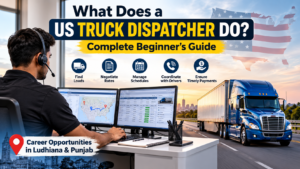
Dispatchers help coordinate loads, communicate with drivers and brokers, monitor shipment progress, and manage operational updates.
The exact responsibilities depend on the company and the type of trucking operation.
3. Potential for Remote Work
Some US trucking companies and logistics service providers hire professionals in India for remote operational support.
However, remote opportunities depend on the employer, experience, working hours, communication skills, and job requirements. Not every US logistics position can be performed remotely.
4. Multiple Career Paths
After developing relevant skills and gaining experience, you may explore positions in dispatching, tracking, documentation, carrier operations, and logistics coordination.
Your progression will depend on your performance, practical experience, and the requirements of prospective employers.
Step-by-Step Guide to Starting a US Logistics Career from India
If you are new to this industry, follow these steps to build a practical foundation.
Step 1: Understand the US Trucking Industry
Before applying for jobs, learn how freight transportation works in the United States.
Start by understanding these basic concepts:
- Shippers: Businesses or individuals that need goods transported.
- Carriers: Companies or owner-operators that transport freight.
- Freight brokers: Intermediaries who arrange transportation between shippers and carriers.
- Dispatchers: Professionals who coordinate trucking operations and support drivers.
- Loads: Shipments that need to be transported from one location to another.
You should also become familiar with common truck types, freight categories, pickup and delivery appointments, and basic transportation terminology.
Understanding these concepts will make it easier to follow dispatching workflows and communicate with industry professionals.
Step 2: Learn Truck Dispatching
Truck dispatching is a practical starting point for people interested in US trucking operations.
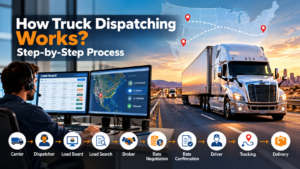
A dispatcher may help identify suitable loads, coordinate with brokers, communicate with drivers, track shipments, and maintain accurate operational records.
To perform these responsibilities effectively, you need to understand the dispatching process from beginning to end.
A structured truck dispatch training in Ludhiana program can help you learn the concepts in a guided environment rather than relying entirely on scattered online information.
Look for training that includes practical exercises, industry terminology, realistic dispatching scenarios, and exposure to commonly used tools.
Step 3: Develop Professional English Communication Skills
Communication is one of the most important skills for working with US logistics companies.
You may need to communicate with drivers, brokers, customers, and other operational teams through calls, emails, and messaging platforms.
Focus on developing these skills:
- Clear spoken English
- Professional telephone etiquette
- Email writing and follow-ups
- Negotiation basics
- Active listening
- Accurate recording of shipment information
You do not need to use complicated English. You need to communicate clearly, confidently, and professionally.
Practicing common dispatching conversations and role-play exercises can help you prepare for interviews and workplace situations.
Step 4: Learn Load Boards and Dispatching Tools
Technology is an important part of modern trucking operations.
Depending on the employer, logistics professionals may use load boards, transportation management systems, spreadsheets, tracking platforms, and communication tools.
Your training should introduce you to relevant tools and explain how they fit into everyday operations.
You should understand how to:
- Review load information
- Compare shipment requirements
- Record pickup and delivery details
- Track shipment progress
- Maintain dispatch records
- Communicate status updates
- organize information accurately
Practical familiarity with these processes can help you demonstrate job readiness during interviews.
Step 5: Understand Freight Rates and Documentation
Truck dispatching also involves understanding the commercial and administrative aspects of freight transportation.
Important concepts include freight rates, rate confirmations, bills of lading, proof of delivery, detention, layover, and necessary charges.
You should learn what these terms mean, when the relevant documents are used, and why accuracy matters.
For example, a rate confirmation records agreed transportation terms between the relevant parties. A bill of lading documents key details about a shipment.
Understanding these documents can help you avoid common operational mistakes and communicate more effectively with carriers and brokers.
Step 6: Enroll in Relevant Professional training
Learning independently can help you understand the basics, but structured training may make the learning process more organized.
If you are based in Punjab, enrolling in a USA logistics course in Ludhiana can be a practical option to explore.
Before choosing a course, check whether it covers:
- Fundamentals of the US trucking industry
- Practical truck dispatching workflows
- Load boards and load selection
- Freight rates and negotiation basics
- Driver and broker communication
- Dispatch documentation
- Shipment tracking and problem-solving
- Interview preparation and career guidance
You should also ask whether the program includes hands-on practice, what software is demonstrated, and whether any placement-related claims are supported by clear details.
The objective is to build usable skills, not simply obtain a certificate.
Step 7: Prepare Your Resume and Apply for Suitable Roles
Once you have developed your foundational knowledge, prepare a resume that highlights your relevant skills and practical training.
You can explore entry-level openings such as:
- Truck Dispatcher Trainee
- Junior Truck Dispatcher
- Logistics Coordinator
- Track and Trace Executive
- Dispatch Operations Assistant
- Freight Documentation Executive
- Carrier Operations Assistant
Job titles and eligibility requirements vary by employer.
When applying, look for positions that match your actual experience. If you are a fresher, highlight your training, communication skills, computer proficiency, and practical assignments instead of claiming professional experience you do not have.
You can search company career pages and reputable job portals, and contact logistics businesses directly where appropriate.
Step 8: Prepare for US Working Hours
US logistics operations often follow schedules based on US time zones. Depending on the employer and the role, professionals working from India may need to work evening or night shifts.
Before accepting a position, clarify the expected shift, weekly schedule, overtime policy, salary structure, and employment terms.
You should also confirm whether the position is remote, office-based, or hybrid.
Understanding these expectations in advance can help you choose a role that fits your circumstances.
What Will You Learn in a Truck Dispatch Course in Ludhiana?
A career-focused truck dispatch course should teach you how dispatching works in real operational situations.
Here are the core subjects to look for.
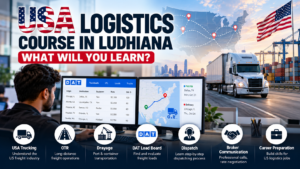
Training ModuleWhat You Should LearnUS trucking fundamentalsIndustry structure, truck types, and key terminologyLoad board operationsFinding, reviewing, and evaluating available loadsFreight ratesUnderstanding rate calculations and negotiation basicsDriver coordinationPickup schedules, delivery appointments, and updatesBroker communicationProfessional calls, emails, and load-related discussionsDocumentationRate confirmations and common freight documentsShipment trackingMonitoring progress and handling status updatesPractical dispatchingApplying your knowledge through simulated scenarios
A well-structured course should connect these topics through practical exercises so that you understand how the complete dispatching workflow operates.
Who Can Start Learning US Logistics in India?
A US logistics career may be worth exploring if you fall into any of these categories.
Students and recent graduates: Build practical skills that complement your education.
Freshers: Learn industry fundamentals and prepare for suitable entry-level positions.
Working professionals: Explore a possible transition into logistics operations after evaluating the required skills and work schedule.
Aspiring entrepreneurs: Learn about dispatching operations before assessing whether to establish a logistics support or dispatching service.
People with communication and coordination skills: Apply your existing strengths to an industry that relies on timely information and organized operations.
Eligibility for specific jobs and training programs varies, so check the relevant requirements before enrolling or applying.
Is a US Logistics Career from India Right for You?
This career path may suit people who enjoy organized work, communication, coordination, and problem-solving.
However, it is important to understand the challenges as well.
- US-aligned shifts may require evening or night work in India.
- Dispatching can involve time-sensitive decisions and unexpected delays.
- Strong communication and attention to detail are essential.
- Entry-level applicants may need practical experience before securing suitable roles.
- Salaries and career progression vary by employer, location, skills, and experience.
Training can help you build foundational knowledge, but it cannot guarantee a job, a particular salary, or immediate career success.
Your results will depend on how consistently you practice, how well you perform in interviews, and how effectively you apply what you learn.
How to Choose the Right USA Dispatch Training in Ludhiana
If you are searching online for USA dispatch training in Ludhiana, compare your options carefully before making a decision.
Use this checklist:
- Practical curriculum: Does the course cover the actual dispatching workflow?
- Industry-relevant tools: Will you learn how load boards and dispatching systems are used?
- Trainer experience: Can the institute explain the trainer’s relevant industry background?
- Hands-on assignments: Will you practice load selection, documentation, and communication?
- Career preparation: Does the program help you prepare for resumes and interviews?
- Transparent fees: Are course charges, duration, and any additional expenses clearly explained?
- Realistic outcomes: Are job, salary, and placement claims explained honestly?
Choosing training based on practical value can help you make a better-informed decision.
Frequently Asked Questions (FAQs)
1. How can I start a US logistics career from India?
Begin by learning the US trucking industry, developing professional communication skills, understanding dispatching workflows, and gaining practical experience. Then apply for suitable entry-level positions with logistics companies that hire in India.
2. Is truck dispatching a good career option for freshers?
Truck dispatching can be an option for freshers who are willing to learn industry processes and develop communication, coordination, and problem-solving skills. Employment depends on the individual’s abilities and the employer’s requirements.
3. Where can I find a truck dispatch course in Ludhiana?
You can research local logistics training institutes, compare their curricula, and evaluate their practical training methods. Look for a program that covers US trucking operations, load boards, documentation, and dispatching workflows.
4. What is the difference between truck dispatch training and USA logistics training?
Truck dispatch training focuses primarily on coordinating trucking operations, loads, drivers, and shipment information. USA logistics training may cover a broader range of subjects, including freight transportation, tracking, documentation, and logistics coordination. The exact scope depends on the course.
5. Can I work for a US logistics company while living in India?
Yes, some US logistics companies and service providers hire professionals based in India for remote or India-based operational roles. Availability depends on the employer, job requirements, working hours, and employment arrangements.
6. Do I need prior logistics experience to learn truck dispatching?
Prior experience is not always necessary to begin learning the fundamentals. However, individual job openings may require specific qualifications, practical experience, or demonstrated skills.
7. Does completing a truck dispatch course guarantee a job?
No. A training course can help you develop relevant knowledge and skills, but employment depends on factors such as your performance, experience, communication abilities, and the availability of suitable openings.
Start Building Your Future in US Logistics Today
A career in the US logistics industry begins with understanding the business, learning the right skills, and practicing the processes used in day-to-day trucking operations.
Whether you are a student, a fresher, or a professional exploring a new direction, developing knowledge of dispatching, load boards, freight documentation, and communication can help you prepare for relevant opportunities.
If you are based in Punjab and want to learn these skills locally, explore a structured training program that focuses on practical learning and industry-relevant knowledge.
Ready to take the first step?
Explore USA Logistics Training in Ludhiana
Discover how professional training can help you understand US trucking operations and prepare for your next career step.
Explore USA Logistics Training in Ludhiana with ATOZ Power Logistics.
Learn the fundamentals. practice the process. Prepare for the opportunities ahead.
Contact ATOZ Power Logistics to learn more about the course curriculum, training schedule, fees, and enrollment process.